A white paper by Jane Berz, MSN, RN, FNCBC, Chair of the Board, SOMAVAC® Medical Solutions, Inc. Highlights below; the complete paper is available as a PDF.
Read the Full White Paper (PDF)The problem no one invested in
Breast cancer continues to be the number one cancer in women, accounting for over 30% of all newly diagnosed cancers in women in the US and worldwide. In 2025 it is estimated there will be over 300,000 new cases in the US, and new indicators show an increase in diagnosis among younger women. For most women, a diagnosis leaves little time to process information and prepare for breast surgery and all it entails.
Comprehensive breast programs have changed the trajectory of experience, treatment options, and outcomes across the continuum of care, from diagnostic screening to surgery, through treatment and into survivorship. However, one area continues to be overlooked: surgical recovery following breast surgery, and in particular the negative patient experience with old-fashioned, inefficient drains. Patients routinely describe it as “the worst part” of the surgical experience.
A tool unchanged since 1971
Post-surgical drainage has not meaningfully advanced since 1971, when Drs. Jackson and Pratt introduced the J-P bulb reservoir, an innovative tool at the time. In years of working with breast cancer patients, management of bulb drains has been a consistent post-operative complaint and a stressful burden for patients and caregivers, adding to the overall trauma of a breast cancer diagnosis and surgery.
Depending on the surgery, patients are sent home with multiple drains from various surgical sites, each connected to a bulb. These bulb evacuators are often attached to the patient’s clothing with safety pins. With little or no instruction, patients and their caregivers must care for and manually empty the bulbs for weeks, adding to anxiety at home for the entire family. Dealing with leakage of bloody fluid and measurement of output can be overwhelming. Milking the drain tubes to prevent blockage, along with fears of pulling out the drains, adds even more unnecessary patient and caregiver stress. Patients are consumed and immobilized by this experience, especially during a time that should be devoted to recovery, healing, and time with loved ones.
“My patients love the SOMAVAC device. They specifically inquire about it before surgery and are relieved to know that they will not have to make contact with or empty bodily fluids, nor worry about making a mistake re-setting the suction of the drain bulbs of the past. SOMAVAC has been an incredible advancement in patient care and satisfaction for my practice.”
A better tool
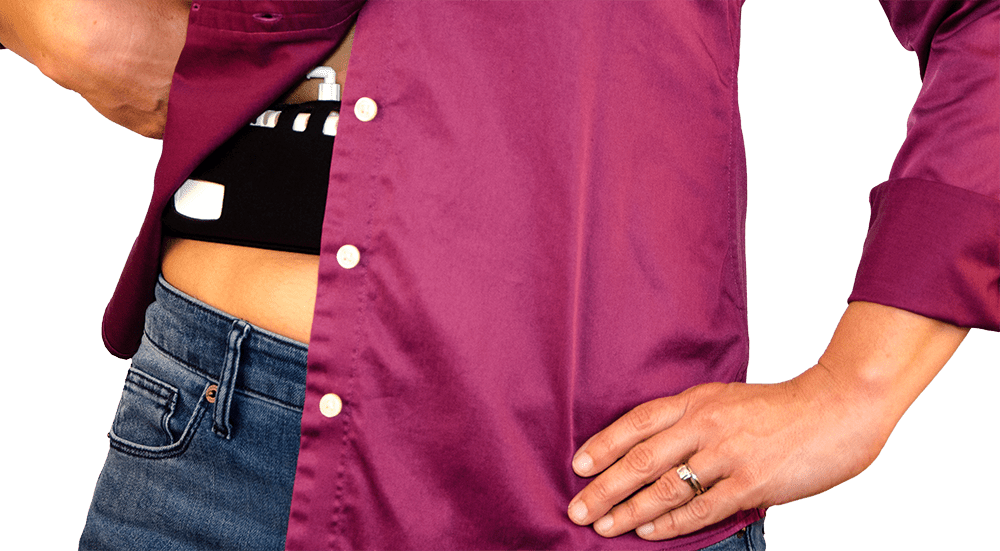
Surgeons and patients now have a powerful new tool to navigate the post-surgical recovery experience. SOMAVAC® provides a deep tissue, negative pressure, continuous suction device for post-operative seroma management. This modern, FDA-cleared surgical device delivers negative pressure to the surgical wound, reducing the time required with drains. It is simple to use, discreet to wear, and provides clinical benefits while increasing patient satisfaction and comfort.
The clinical benefits of negative pressure wound management have been well established, improving wound healing and reducing surgical site complications. At SOMAVAC® we also recognize the importance of hearing directly from patients. With our mission to revolutionize post-surgical recovery, the patient is at the heart of all we do.
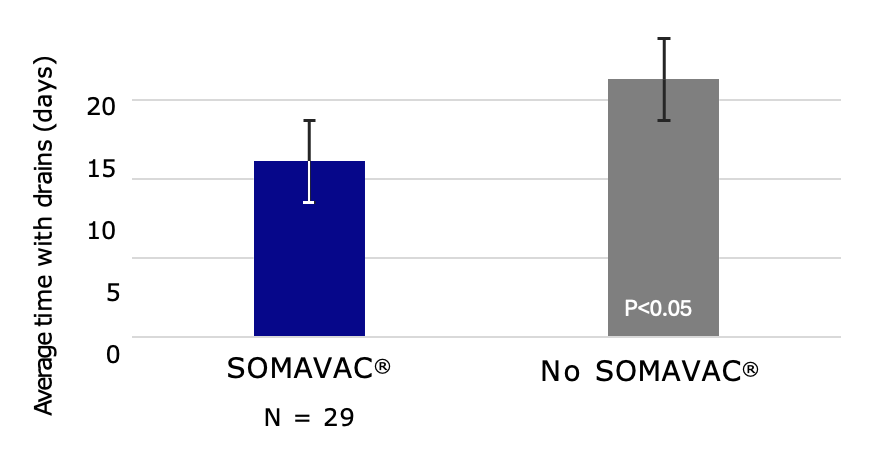
Patient benefits of the SOMAVAC® negative pressure system
- 30% reduction in duration of drain use, leading to earlier mobility
- Simple to use, reducing fear and anxiety
- Less burden on patients and caregivers to manage drains
- 24/7 call center to answer concerns and questions
- Less discomfort from manipulating drains
- Safe from back flow, clogging, and the need to milk drains
- Reduced potential infection from a closed system
- Non-touch removal of disposable fluid with precise measurement
- Confident and carefree use in returning to daily living sooner
- Secure, sleek belt with a snug fit and no leaks
- Earlier mobility, which leads to earlier exercise and PT therapies
Easier to Use Than a Thermometer1,6
Patient-reported • 0 to 100 scale • p=0.0008 • Data on file
46.7
JP Bulbs
93.2
SOMAVAC
82
Thermometer
78
Inhaler
Rated “best imaginable” on SUS scale. Thermometer & Inhaler: Kortum & Peres (2015). Data on file.
Benefits for surgeons
- Prevention of seroma, leading to better wound healing
- Earlier drain removal due to continuous negative pressure
- Better patient compliance and reliability with drain care
- Reduced patient calls, complaints, and office visits related to drain issues
- Increased patient satisfaction, comfort, and mobility
- Earlier mobility leading to earlier PT and other therapeutic treatments
- Market differentiator for early adopters, which can lead to increased referrals by patients locally and regionally
And isn’t it about time?
The great news is that we now have a better tool to replace the cumbersome, inefficient bulbs of the past, and a better tool for better outcomes. We have listened to patients and surgeons and provided a much-needed solution that will change the future of post-surgical recovery once again.
Jane Berz, MSN, RN, FNCBC
Chair of the Board, SOMAVAC® Medical Solutions, Inc.
References
- American Cancer Society. Key Statistics for Breast Cancer. Cancer.org.
- Khansa, I., Khansa, L., Meyerson, J., & Janis, J. E. (2018). Optimal Use of Surgical Drains: Evidence-Based Strategies. Plastic and Reconstructive Surgery, 141(6), 1542–1549.
- Jackson, Frederick E.; Pratt, Richard A. (1971). “Technical report: A silicone rubber suction drain for drainage of subdural hematomas.” Surgery. 70(4): 578–9.
- Cagney, D., Simmons, L., O’Leary, D. P., Corrigan, M., Kelly, L., O’Sullivan, M. J., Liew, A., & Redmond, H. P. (2020). The Efficacy of Prophylactic Negative Pressure Wound Therapy for Closed Incisions in Breast Surgery: A Systematic Review and Meta-Analysis. World Journal of Surgery, 44(5), 1526–1537.
- Staniszewska S, Söderholm Werkö S (2021). Mind the evidence gap: the use of patient-based evidence to create “complete HTA” in the twenty-first century. International Journal of Technology Assessment in Health Care 37, e46, 1–7.
- Data on file.
MKG-0113 Rev A