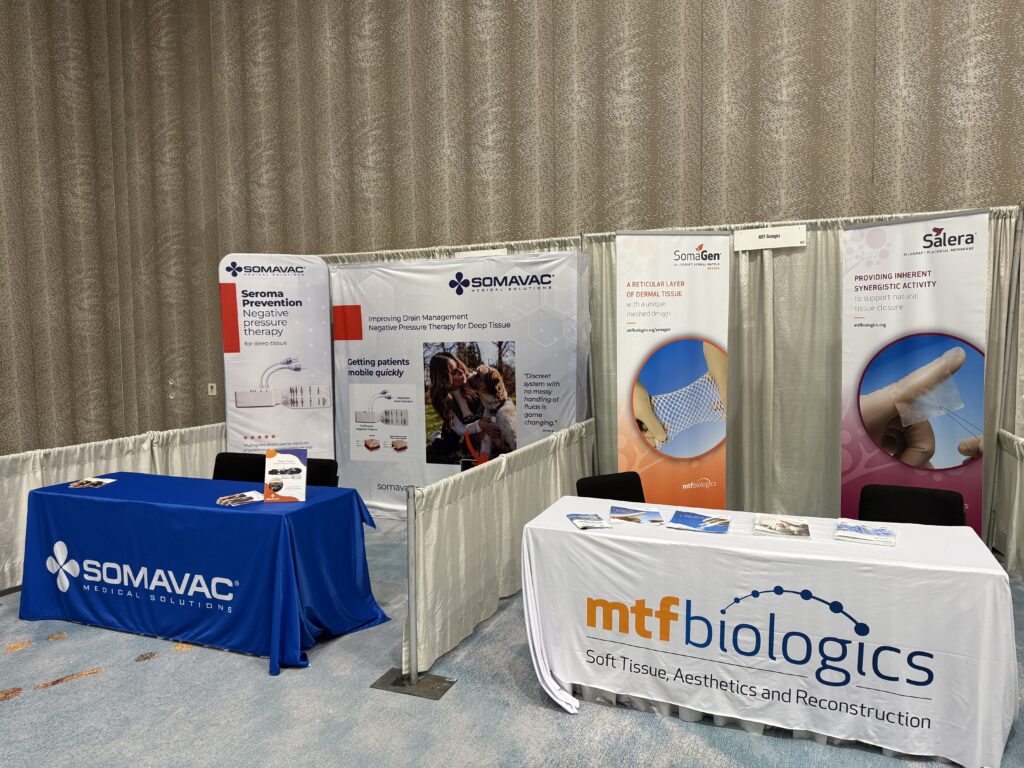
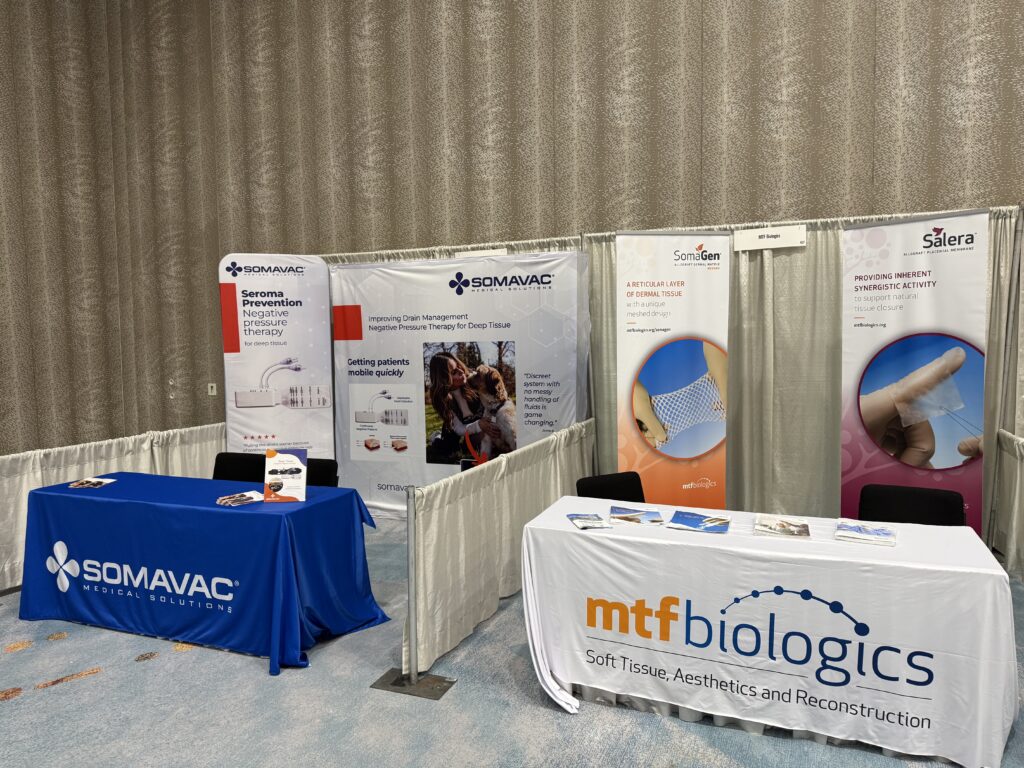
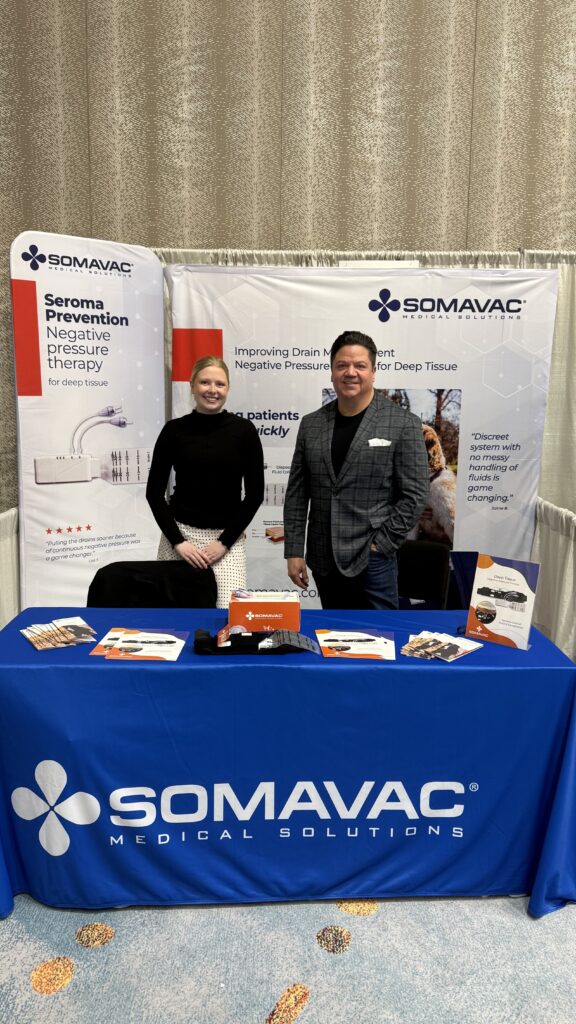
SOMAVAC® was proud to attend the American Society of Reconstructive Microsurgery (ASRM) meeting, connecting with leaders in microsurgery and reconstructive care.
The event was an invaluable opportunity to engage in meaningful conversations, share insights, and continue advancing solutions that support surgical teams and improve patient recovery.
Why ASRM
Reconstructive microsurgeons work at the far end of the complexity curve: free flaps, long operative times, and closures where fluid management directly affects whether tissue heals the way it should. Seroma is not a nuisance in that setting; it is a threat to the reconstruction.
That makes ASRM one of the most useful rooms we can be in. The questions we get here are specific: how the system behaves across multiple drains, what continuous negative pressure does in the deep wound space versus at the surface, and what changes for a patient managing recovery at home.
What we showed
SOMAVAC® delivers continuous, sensor-controlled suction at −100mmHg through a fully closed system that accepts up to four surgical drains via one-way connectors. Unlike a bulb, which loses vacuum as it fills and has to be reset by hand, the pump holds pressure around the clock, delivering deep tissue negative pressure therapy that removes stagnant fluid and keeps tissue layers in apposition.
Patients wear it on a belt, discreetly under clothing, and dispose of fluid without touching it. In a prospective mastectomy study, drains came out up to 30% sooner.1
Thank you to everyone who stopped by the booth. Conversations like these continue to shape how we build.
1. Data on file. Prospective mastectomy study, N=45, p=0.003.