Improve Outcomes and Delight Your Patients
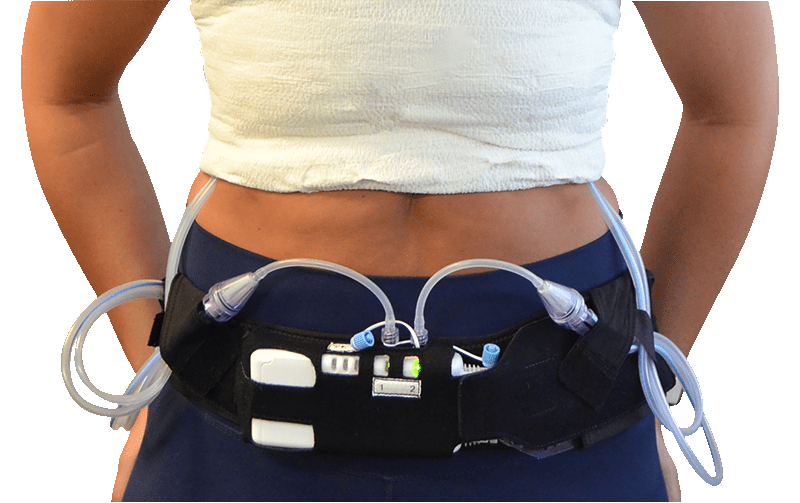
SOMAVAC® delivers deep tissue negative pressure therapy: continuous sensor-controlled suction at −100mmHg directly into the wound space. A better surgical recovery experience for your patients.1
Reduce risk of complications. Faster drain removal. Patients who love the experience.1 24/7 support so your staff isn’t fielding drain calls.
- No change to your surgical technique
- Use your existing drains
Deep Tissue Negative Pressure Therapy
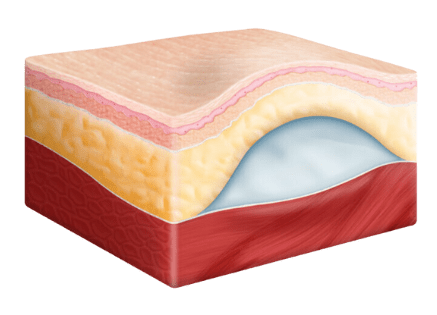
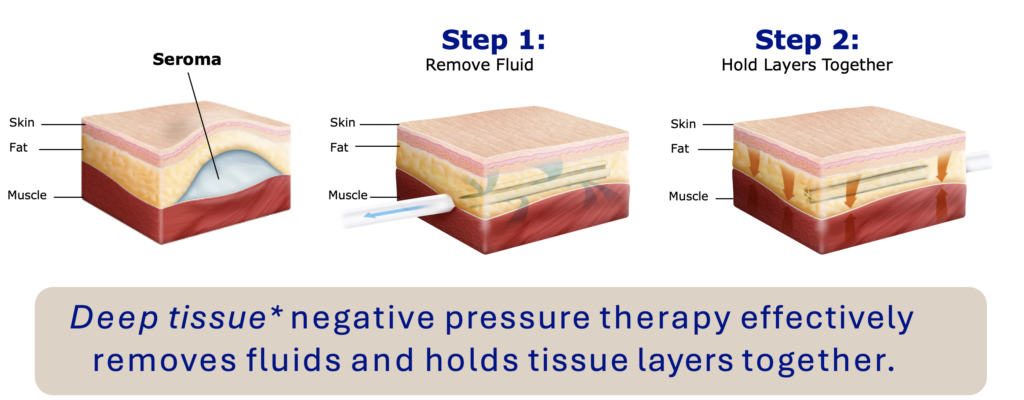
The Problem: Seroma
Fluid accumulates in the dead space, preventing tissue healing
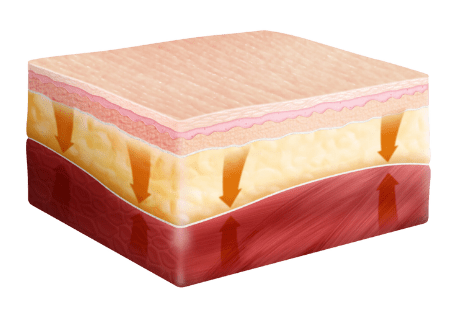
The Solution: Deep Tissue Negative Pressure Therapy
Continuous −100mmHg removes fluid and promotes tissue apposition1
If You Like Surface Negative Pressure Wound Therapy, You’ll Love This
Already using Prevena™ or similar surface negative pressure wound therapy? SOMAVAC® is the natural complement, same proven negative pressure technology, applied where it’s never been before: directly into the deep wound space.
Surface Negative Pressure Wound Therapy
Traditional Surface Devices
- Pressure on incision surface
- Helps surface tissues approximate for incision healing
- Does not remove fluid from deep wound space
- Does not create deep tissue apposition or promote integration of acellular dermal matrices or synthetic meshes
SOMAVAC® Deep Tissue Therapy1
First & Only
- Continuous −100mmHg into the deep wound space
- Removes fluid to prevent seroma formation
- Creates tissue apposition for proper healing
- Supports integration of acellular dermal matrices or synthetic meshes
- Reduces infection risk by eliminating waste fluid
How SOMAVAC® Works
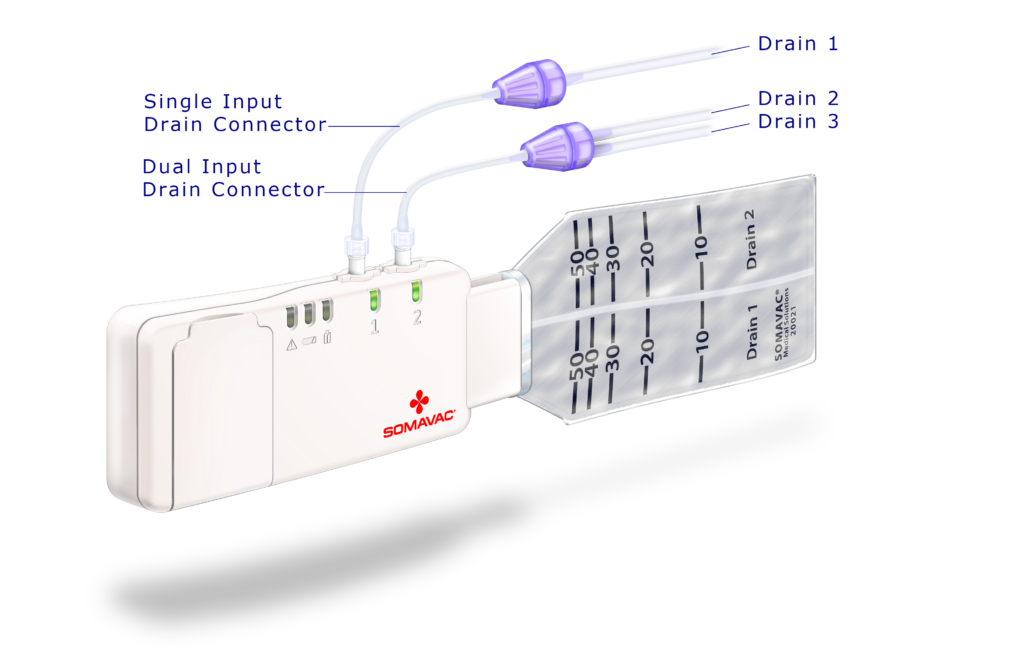
As flat as a phone, worn discreetly on a belt under clothing. Connects up to 4 surgical drains.
Elevate Your Standard of Care
SOMAVAC® Deep Tissue Therapy delivers measurable improvements across the metrics that matter most to your practice.1
30% Faster Drain Removal1
Continuous −100mmHg deep tissue suction removes fluid faster than passive bulbs. 11.4 days on average, as early as 8.3 days, versus 16.3 days with JP bulbs.*
Reduced Risk of Complications1
Fully-closed system minimizes surgical site exposure. SOMAVAC® patients had a 0% seroma rate (vs. 13.6%, p=.009)4. Timely removal reduces infection risk, which triples after 3 weeks2 (Hanna et al., 2016).
24/7 US-Based Patient Support
We take the drain calls. Our U.S.-based team answers the phone 24/7 (real people, no robots) so your patients get help without burdening your office.
Reduced Reoperations
1 in 5 women require reoperation with traditional drains3. SOMAVAC® delivered an 86% reduction in reoperations (2% return to OR vs. 13.6%, p=.05)4.
SOMAVAC® Delights Patients
Patients rated SOMAVAC® easier to use than a thermometer. SUS score: 93.1 (“best imaginable”) vs. 46.7 for JP bulbs.*1,6
Fewer Follow-Up Visits
Faster drain removal and fewer complications reduce post-operative office visits, freeing clinical time and improving throughput.1
Your Patients Hate Drains More Than You Think
A 2025 peer-reviewed study of 203 patients reveals just how much surgical drains impact quality of life.6 Most surgeons know patients dislike drains, but they don’t realize how much until they see the data.
Patients in communities where SOMAVAC® is available have started requesting it by name, and some are choosing their surgeon based on who offers it. This isn’t just a clinical upgrade. It’s a practice differentiator.
“I’m kind of embarrassed to admit this, but I didn’t realize how much my patients hated specifically the bulbs. I knew they hated it because it’s part of a big thing they hate anyway, but I did not have an appreciation for just how much.”
Board-certified plastic surgeon, after first use
Patient Attitudes on Surgical Drains6
N = 203 • Gadiraju et al. Plastic and Reconstructive Surgery, Global Open, 2025
Drains were a significant aspect of my recovery
90%
62.1% strongly agree • 28.1% agree
Drains made it harder to complete daily tasks
85%
47.3% strongly agree • 37.4% agree
Drains negatively impacted my quality of sleep
77%
44.8% strongly agree • 32.0% agree
Drains negatively impacted my mood
66%
35.5% strongly agree • 30.5% agree
Knowing I’d need a drain would make me apprehensive about future surgery
37%
16.3% strongly agree • 20.7% agree
I would prefer surgeons who use improved alternatives to existing drains
65%
34.0% strongly agree • 31.0% agree
Data That Speaks for Itself
30%
Drains Out Sooner1
11.4 days on average, as early as 8.3 days, vs. 16.3 days with JP bulbs. SOMAVAC group (n=45), p=0.003.
86%
Reduction in Reoperations1
86% reduction in return to the OR: 2% vs. 14% with JP bulbs (p=.05, n=49).4
9.27/10
Patients Love SOMAVAC®1
Mean satisfaction on the Likert scale (p=0.008, n=49).4
Reduce Your Time with Drains1
Prospective mastectomy study • N=45 • p=0.003 • Data on file
11.4 days
SOMAVAC®
16.3 days
JP Bulbs
Nearly 5 fewer days with drains
Easier to Use Than a Thermometer1,6
Patient-reported • 0 to 100 scale • p=0.0008 • Data on file
46.7
JP Bulbs
93.2
SOMAVAC
82
Thermometer
78
Inhaler
Rated “best imaginable” on SUS scale. Thermometer & Inhaler: Kortum & Peres (2015). Data on file.
*Early clinical results. Data on file. References: Hecox et al. (2026); Hanna et al. (2016); Kortum & Peres (2015).
JP Bulbs Do Not Provide Continuous Suction1,8
Ability of drain to collect fluid: 100-mL bulb
JP bulb suction drops to <40mmHg within 30mL of fluid collection. SOMAVAC® maintains a continuous −100mmHg.
*Carruthers et al. 2013. Optimizing the Closed Suction Surgical Drainage System. American Society Plastic Surgical Nursing.
Drains Out Sooner With SOMAVAC®1
Quicker fluid removal means patients enter the remodeling stage sooner, so drains can come out at your discretion, days earlier.
Representative Drain Output1
*Data on file
At a Glance
30% Faster Drain Removal1
Continuous suction vs. passive bulb drainage
Simplifies Post-Operative Experience1
Efficient deep tissue fluid removal via one device
Easier Than a Thermometer1,6
Patient-reported System Usability Scale scores
Continuous Sensor-Controlled Suction1
Maintains −100mmHg, no manual compression needed
Fully-Closed System
One-way connectors minimize surgical site exposure
150-Patient Study1
Presented at SESPRS and in review: 0% seroma (p=.009), 86% reduction in reoperations (p=.05), 9.27 satisfaction (p=.008), n=49
FDA-Cleared for Seroma Prophylaxis
SOMAVAC® is indicated for removal of bodily fluids following large flap forming plastic and general surgeries. Most commonly used in:
Mastectomy
Reconstruction
Hernia Repair
Body Contouring
Abdominoplasty, Tummy Tuck, Mommy Makeover
Panniculectomy
What Surgeons Are Saying
“Since using SOMAVAC in my breast and abdomen cases, I have not taken a single patient back to the Operating Room for seroma or revision surgery due to a postoperative complication.”

Marc E. Walker, MD, MBA, FACS
Plastic & Hand Surgery, UMMC, Jackson
“SOMAVAC feels like a true step forward! What was once an uncomfortable part of recovery is now streamlined, clean and far easier for the patient and surgical team!”

Regina Fearmonti, MD, FACS
Plastic & Reconstructive Surgery, Alon Aesthetics, San Antonio
“SOMAVAC is an exciting new technology designed to enhance patient recovery and improve overall outcomes. Early feedback indicates significant improvements in patient comfort and satisfaction.”

Aldona Spiegel, MD, MBA
Director, Center for Breast Restoration, Houston Methodist Hospital
“Years ago, the engineers behind SOMAVAC™ asked me what needed improving in general surgery. I told them seroma remains a problem in abdominal wall reconstruction, for lack of a modern, effective surgical drain. They answered that challenge by creating SOMAVAC™, and we’ve seen tremendous impact on patient well-being and surgical results, not only in abdominal wall reconstruction but in breast reconstruction.”

Guy Voeller, MD, FACS
General & Abdominal Wall Surgery, Baptist Memorial East
“Drain management technology has improved. Options are becoming available that help evacuate the fluid much more effectively from the body, and that allows the freedom for the patient to be very independent.”
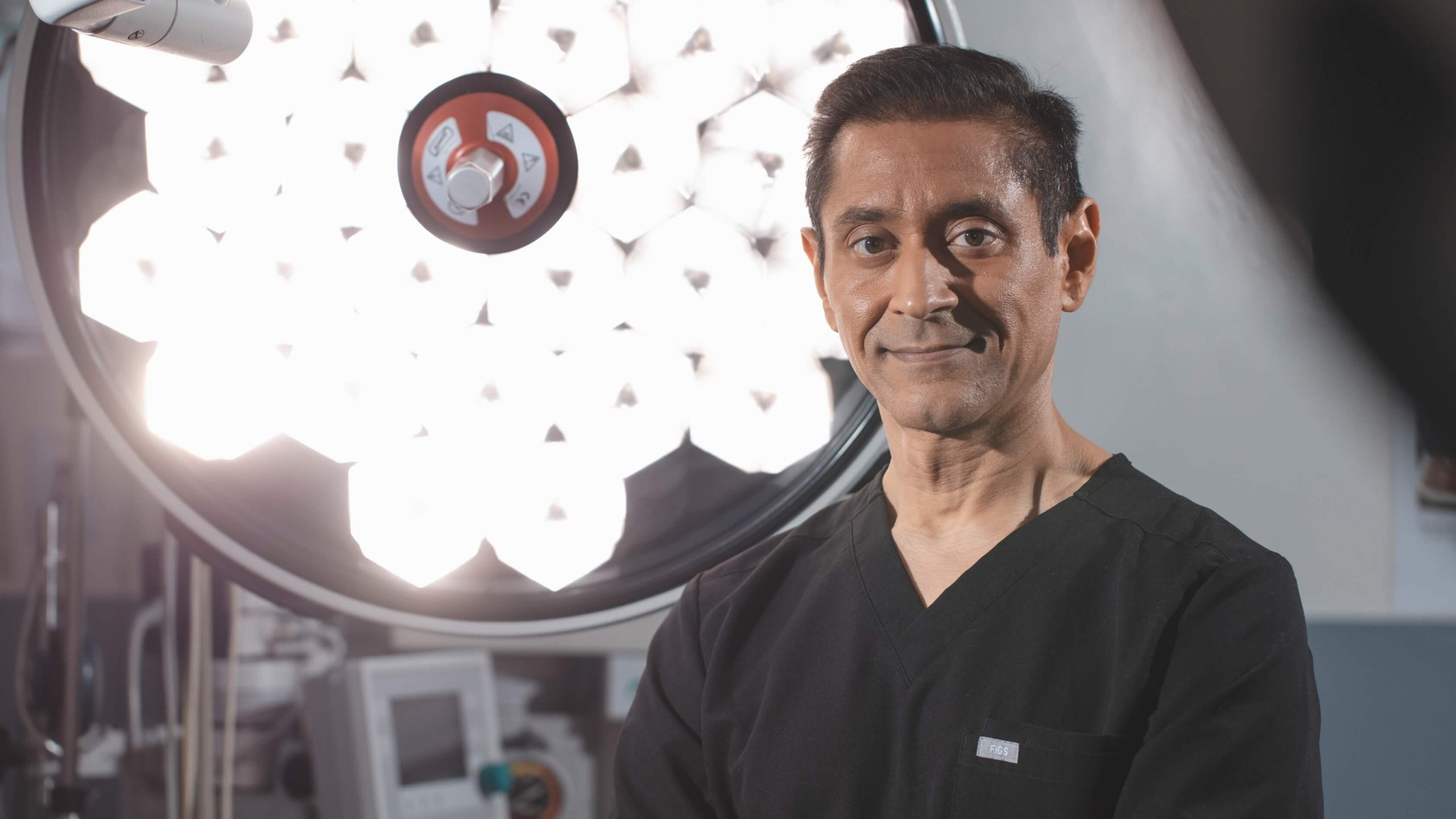
Nirav Savalia, MD
Director of Oncoplastic & Aesthetic Breast Surgery, Hoag Hospital
The Case for Your VAC Committee
Seroma complications drive costly reoperations and readmissions. SOMAVAC® Deep Tissue Therapy addresses the root cause, delivering measurable savings.
86%
Reduction in reoperations: 2% vs. 14% with bulbs (Hecox)1
$453K
Savings per 100 surgeries
$10.7K
Mean cost per SSI (Olsen et al.)8
Economic model based on published literature and clinical data. Reoperation costs estimated at $25K to $46K per event. SSI data from Olsen et al. (2008). Covered within the overall cost of surgery.
Clinician FAQ
Bring SOMAVAC® to Your Practice
Our clinical team handles onboarding, training, and ongoing support to integrate SOMAVAC® into your workflow.
Clinical consultation & product demo
Our team walks through the device, data, and integration process
VAC committee support
We support you through the VAC approval process
Full clinical data package
Early results, SUS scores, peer-reviewed references
Staff training & patient education materials
24/7 U.S.-based patient support included: (833) 766-2822
References
- Data on file, SOMAVAC Medical Solutions.
- Hanna, Kasandra R., et al. “Reducing Infectious Complications in Implant-Based Breast Reconstruction: Impact of Early Expansion and Prolonged Drain Use.” Annals of Plastic Surgery 76 (2016): S312–S315.
- Bennett, Katelyn G., et al. “Comparison of 2-Year Complication Rates Among Common Techniques for Postmastectomy Breast Reconstruction.” JAMA Surgery 153.10 (2018): 901–908.
- Hecox, E. E., J. W. Riley, J. B. Suares, et al. “Internal Negative Pressure Wound Therapy Device Improves Patient Satisfaction and Reduces Seroma and Return to OR Compared to Standard Bulb Drains Following Breast Surgery.” Paper presented at the Southeastern Society of Plastic and Reconstructive Surgeons 69th Annual Scientific Meeting, June 13–17, 2026, Marco Island, FL.
- Kortum, Philip, and S. Camille Peres. “Evaluation of Home Health Care Devices: Remote Usability Assessment.” JMIR Human Factors 2.1 (2015): e4570.
- Gadiraju, G. K., et al. “Understanding the Impacts of Surgical Drains on Postoperative Pain and Quality of Life.” Plastic and Reconstructive Surgery – Global Open 13.1 (2025): e6474.
- Carruthers, Katherine H., et al. “Optimizing the Closed Suction Surgical Drainage System.” Plastic and Aesthetic Nursing 33.1 (2013): 38–42.
- Olsen, Margaret A., et al. “Hospital-Associated Costs Due to Surgical Site Infection After Breast Surgery.” Archives of Surgery 143.1 (2008): 53–60.